

Final Website Project

Final Website Project

Home

Why SEO? This is a question SEOs and digital marketers face inside and outside the marketing organization. SEO has been around for more than a decade and a half and now makes up a gigantic...

SEO

What Is an SEO Strategy? An SEO strategy (also referred to as “SEO approach” or “search engine optimization strategy”) is the process of planning, outlining, and implementing steps designed to improve search engine rankings. In...

Tips

Google SEO Tips for Beginners. The most important SEO tips that can make a difference to your Google rankings are: Optimize your page titles and meta descriptions Create SEO friendly URLs Add a breadcrumb menu to...

Home

Why SEO?

This is a question SEOs and digital marketers face inside and outside the marketing organization. SEO has been around for more than a decade and a half and now makes up a gigantic share of traffic for successful websites.

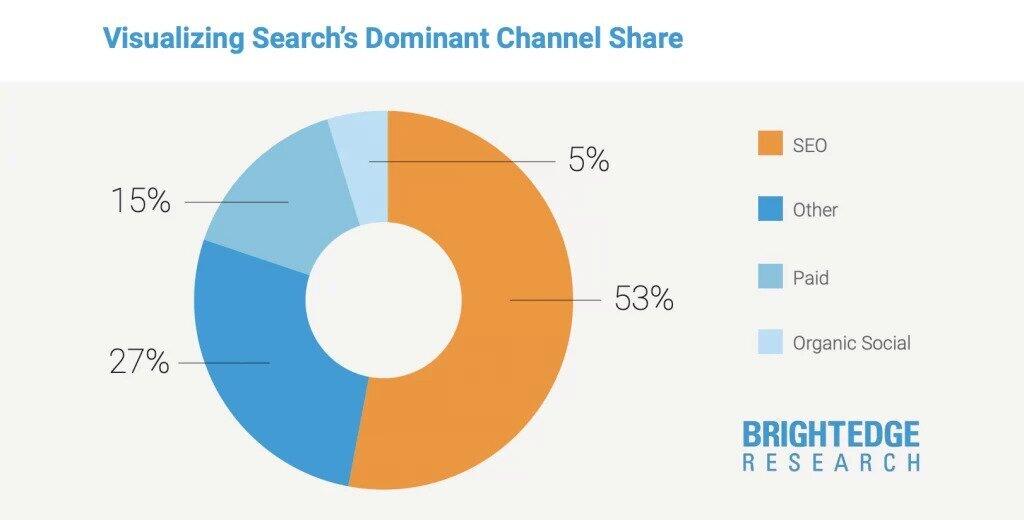
In fact, research by BrightEdge shows organic search is the largest driver of Web traffic for most sectors and a crucial component of revenue. The strength of SEO and driving organic traffic is clear.

Organic search usage and share are outpacing growth in other channels. Organic and paid dominated web traffic in 2019. Optimizing your pages for SEO is going to be even more important in 2020 as the organic search continues to rise above other search traffic.
SEO Importance

Use these points to elevate the understanding and position of SEO in the marketing mix.

  1. Channel Share. Fifty-three percent of traffic to websites comes from organic search (source: BrightEdge Organic Channel report). Organic search delivers the most traffic to websites by a wide margin.
  2. Search Share. On average, 83 percent of the traffic from search engines comes from SEO, and 17 percent from paid search (source: BrightEdge internal data).
  3. Share of Focus. Even though organic search accounts for the majority of traffic, most companies spend more money on paid search. Paid search owned 15% of web searches in 2019.
  4. Long-Term Traffic Equity. While SEO does require an upfront resource investment, search engine rankings, once earned, have long-term duration.
  5. Organic Traffic. SEO traffic has no media cost and can provide a substantial ROI – higher than most other channels. Search engines appreciate and reward content that is relevant to readers and written for them rather than for bots. Focus on optimizing for your target audience.
  6. Structure. Proper SEO helps organize your website and makes it easier for your visitors to navigate and transact.
  7. Alignment. Marketing works best when all channels are aligned on the same message – including organic search. Multiple channel alignment improves results in all channels.
  8. Brand Elevation. SEO success secures a share of voice on the search engine results pages, and this is an integral component of your brand and creating brand trust.
  9. Conversion. SEO traffic often converts better than other channels due to the fact that rankings often convey trust from the search engines. While paid search produces results quickly, it lacks authenticity and therefore should be paired with SEO strategies, too.
  10. Channel Synergy. Your other marketing channels generate demand for people to query the search engine for products and services such as yours. If your website is not there to collect the demand you spent money creating, your competitors will collect it.
  11. Market Consideration. Organic search is a critical part of the research process, especially for products or services with a long sales cycle. People use search engines to create a list of candidates for the product or service and use them again to collect opinions and reviews that help them make decisions

SEO

What Is an SEO Strategy?

An SEO strategy (also referred to as “SEO approach” or “search engine optimization strategy”) is the process of planning, outlining, and implementing steps designed to improve search engine rankings.

In other words: an SEO strategy is the process that you follow when you want to get more organic traffic.

With that, here are the steps to create an SEO strategy in 2020:

Step #1: Create a List of Keywords

Everything in search engine optimization revolves around keywords.

Which is why keyword research is usually the first step of any legit SEO strategy.

You can easily find keywords that your target customer searches for using Google Suggest.

Start typing a keyword into Google’s search field, and it will populate a list of suggestions:

Google search suggestions

These usually make awesome keywords for SEO because they come straight from Google.

So you know that people are actually searching for them.

Plus, longer keywords (known as “long tail keywords”) tend to be less competitive than “short tail” terms.

SEO Strategy

If you want to check out the search volume and competition levels for those terms, you can use a keyword tool like SEMrush or Ubersuggest.

Step #2: Analyze Google’s First Page

OK, so you found a handful of keywords.

Now it’s time to see what’s already working for those keywords.

To do that, just type one of the keywords that you found into Google.

Step #3: Create Something Different or Better

Now it’s time to create some super high-quality content.

When it comes to SEO content, you’ve got two options:

Option #1: You can create something different.

Option #2: You can create something better.

Different

Sometimes you want to create something bigger and better than what’s out there.

A few months ago I sat down to write a piece of content optimized around: “Mobile SEO”.

And I noticed Google’s first page was littered with list posts, like: “X Ways to Mobile Optimize Your Site.”

Tips

Google SEO Tips for Beginners.

The most important SEO tips that can make a difference to your Google rankings are:

  1. Optimize your page titles and meta descriptions
  2. Create SEO friendly URLs
  3. Add a breadcrumb menu to your internal pages
  4. Add internal links to your content
  5. Use headings and formatting options to make your pages easier to read
  6. Customize your 404 page
  7. Optimize your images
  8. Improve your page speed
  9. Get backlinks from other websites
  10. Make sure that your website is mobile-friendly
  11. Create an XML sitemap and a User sitemap
  12. Improve the quality of your content
  13. Update your website with fresh content
  14. Check for broken links
  15. Use Google webmaster tools and analytics

What you will read in this post is SEO advice that works.

I have tested this strategy over the years on a number of websites with remarkable results.

Description

The page description meta tag is also very important. It gives users, Google, and other search engines a summary of what the page is about.

Google may choose to show what you type in the description as a snippet for your page or may decide to use a part of your page’s content.

In other words, it does not mean that what you write in the description will show in the snippet.

The guidelines for writing a good meta description are:

  • Always provide a unique description for all pages, posts, products of your website.
  • Keep the meta description length between 180-200 characters.
  • Avoid repeating the title in the description
  • Don’t add too many keywords

You can see the example below on how I use the description tag on my SEO Course page.

tips
Meta Description Example
2. Permanent link structure
SEO Friendly URL
SEO Friendly URL

Guidelines for SEO Friendly URLs

  • Make Urls simple and easy to understand for search engines and users
  • Use hyphens ‘ – ‘ to separate the words that make up a URL
  • Avoid lengthy Urls with unnecessary information
Why SEO?

This is a question SEOs and digital marketers face inside and outside the marketing organization. SEO has been around for more than a decade and a half and now makes up a gigantic share of traffic for successful websites.

In fact, research by BrightEdge shows organic search is the largest driver of Web traffic for most sectors and a crucial component of revenue. The strength of SEO and driving organic traffic is clear.

Organic search usage and share are outpacing growth in other channels. Organic and paid dominated web traffic in 2019. Optimizing your pages for SEO is going to be even more important in 2020 as the organic search continues to rise above other search traffic.

SEO Importance

Use these points to elevate the understanding and position of SEO in the marketing mix.

  1. Channel Share. Fifty-three percent of traffic to websites comes from organic search (source: BrightEdge Organic Channel report). Organic search delivers the most traffic to websites by a wide margin.
  2. Search Share. On average, 83 percent of the traffic from search engines comes from SEO, and 17 percent from paid search (source: BrightEdge internal data).
  3. Share of Focus. Even though organic search accounts for the majority of traffic, most companies spend more money on paid search. Paid search owned 15% of web searches in 2019.
  4. Long-Term Traffic Equity. While SEO does require an upfront resource investment, search engine rankings, once earned, have long-term duration.
  5. Organic Traffic. SEO traffic has no media cost and can provide a substantial ROI – higher than most other channels. Search engines appreciate and reward content that is relevant to readers and written for them rather than for bots. Focus on optimizing for your target audience.
  6. Structure. Proper SEO helps organize your website and makes it easier for your visitors to navigate and transact.
  7. Alignment. Marketing works best when all channels are aligned on the same message – including organic search. Multiple channel alignment improves results in all channels.
  8. Brand Elevation. SEO success secures a share of voice on the search engine results pages, and this is an integral component of your brand and creating brand trust.
  9. Conversion. SEO traffic often converts better than other channels due to the fact that rankings often convey trust from the search engines. While paid search produces results quickly, it lacks authenticity and therefore should be paired with SEO strategies, too.
  10. Channel Synergy. Your other marketing channels generate demand for people to query the search engine for products and services such as yours. If your website is not there to collect the demand you spent money creating, your competitors will collect it.
  11. Market Consideration. Organic search is a critical part of the research process, especially for products or services with a long sales cycle. People use search engines to create a list of candidates for the product or service and use them again to collect opinions and reviews that help them make decisions

